

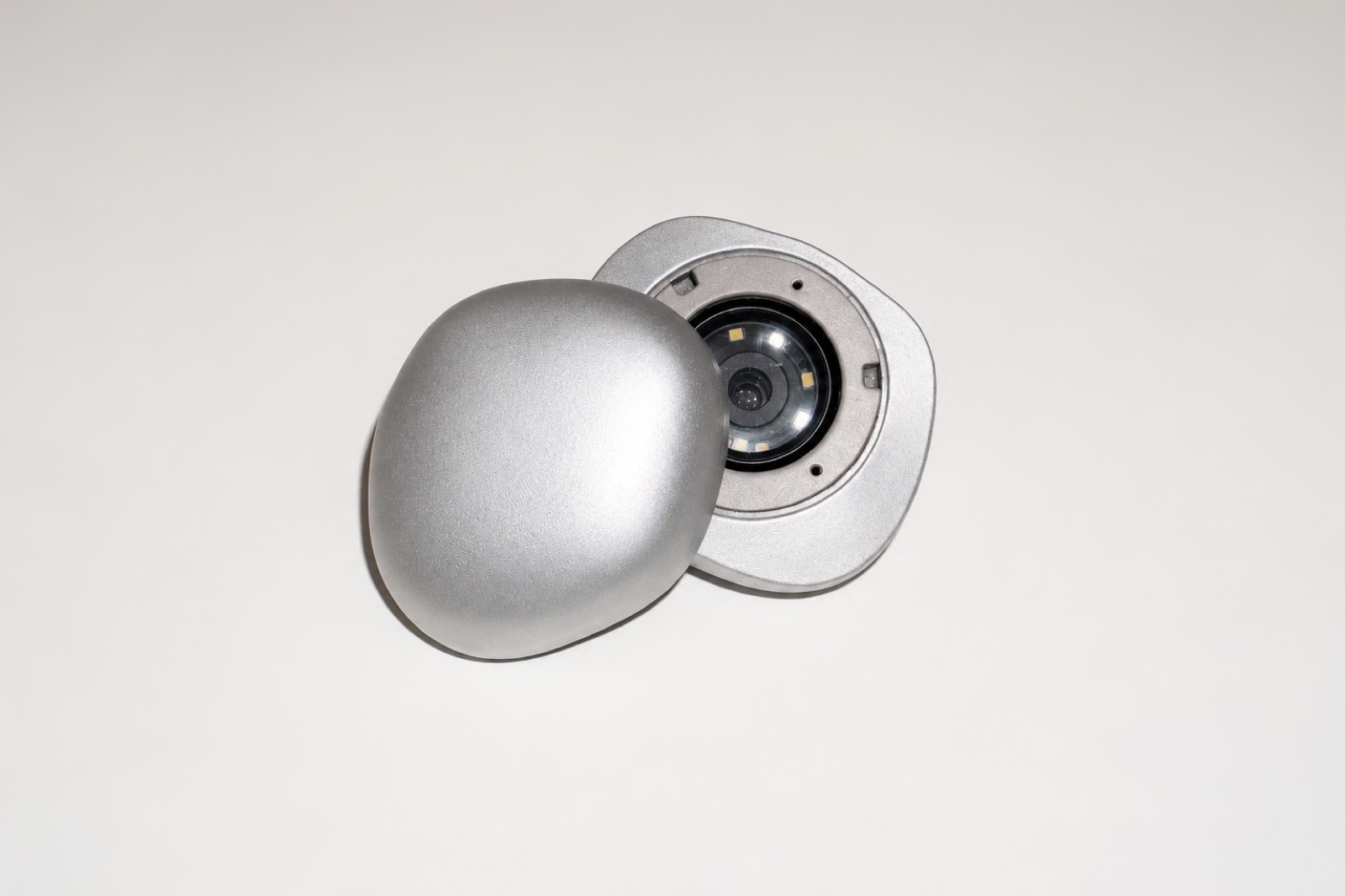
Goda Šmulkštytė and Rugilė Stanevičiūtė launched Rhia Skin on 17 November. Rhia Skin is a small handheld scanner with an app. You scan your face each morning, and the app tracks how your skin changes over time: redness, pigmentation, pores. The simplest way I can describe it is a Whoop for your skin.
Goda studied at Turing College. Rugilė wanted to, and kept asking Goda what it was like. That's a big part of how they became friends. I interviewed them both a week before launch, and what struck me most was how they work. Rhia Skin's bet is that you can measure skin instead of guessing about it. They run the company the same way. When they don't know something, they go and measure it.
Rhia Skin is the first chapter of what I expect to become one of our best alumni stories. Goda Šmulkštytė is a Turing College alumna who learned to code in our Software and AI Engineering programme, and Rhia Skin is the Vilnius startup she co-founded with Rugilė Stanevičiūtė. It joins a growing group of companies started by Turing College alumni, including Martynas Krupskis's Fieldy and Edvard Sivickij's Condense.
How did a conversation about red cheeks become a company?
Rhia Skin started in a bar, with two founders asking why nobody had built a way to track skin. You can track your sleep, your heart rate and your steps. Skin changes week to week, people spend hundreds a month on it, and there was nothing to track it with.
Goda and Rugilė first met through the student council at university. They kept running into each other at founder events in Vilnius, mostly at Basedspace. Rugilė was running another business. Goda was building a neurotech device with a different co-founder and had spent time in San Francisco. Around the same time, both of those co-founders left. The two of them had always said they'd build something together.
One evening their cheeks went red from the wine, and the talk turned to rosacea and how hard it is to know whether anything you do for your skin is working. "There's Whoop, but nothing for skin health that you can track over time," Goda says. "It doesn't exist anywhere."
Why did they fly to Seoul on a one-way ticket?
The same day they decided to go all in, they booked one-way tickets to Seoul. They had no plan and picked an Airbnb without checking the neighbourhood. "The whole world knows Korea is where skincare happens," Rugilė says.
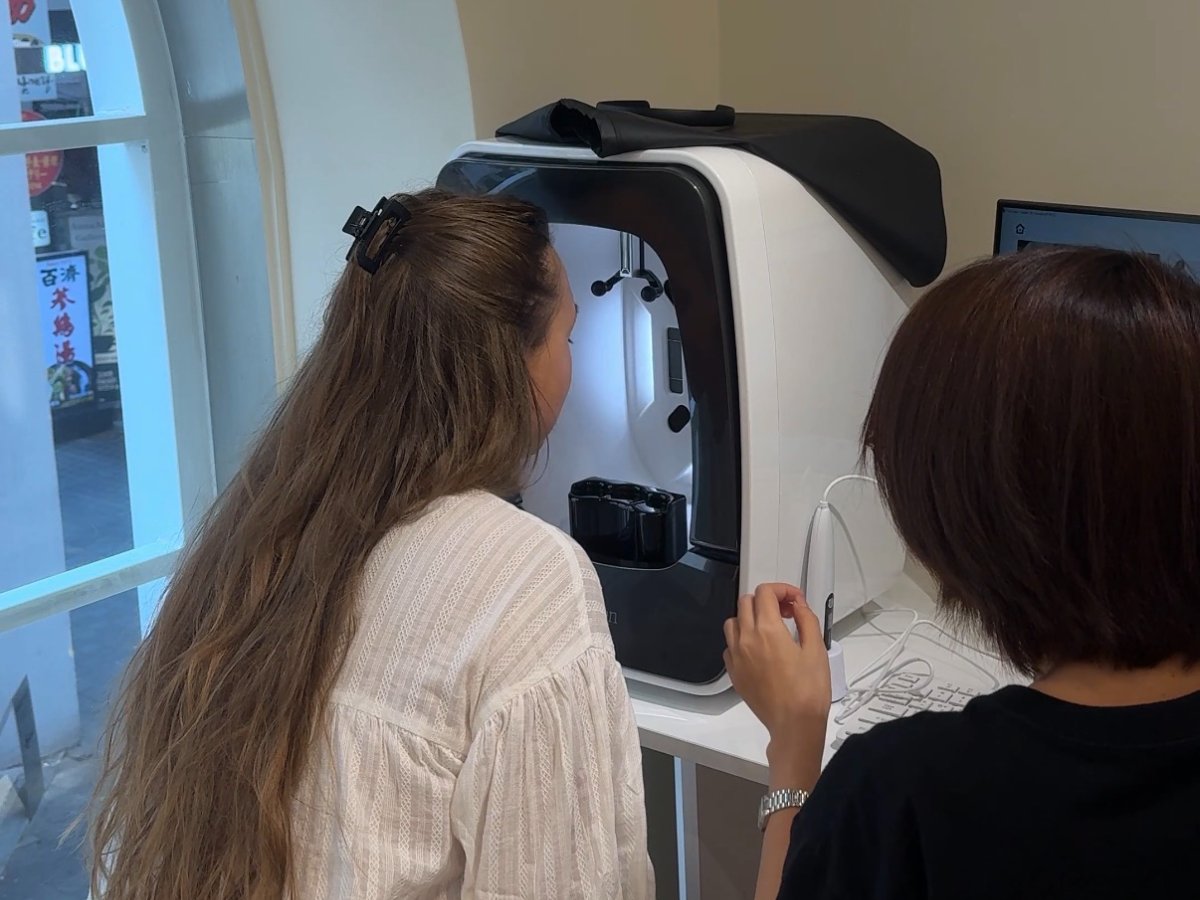
Most people at this stage would write a market research doc. They went to where the devices are made. They visited dermatology clinics to see which skin scanners already exist, tried to reverse-engineer them, and met suppliers who'd been building similar scanners for about ten years.
I like this instinct a lot. Action gives you information and energy. A plan gives you neither. Ed Catmull, who co-founded Pixar, writes in Creativity, Inc. that "early on, all of our movies suck." They get good through fast attempts and honest feedback on each one. Speed matters for the same reason. Each attempt teaches you something, and the team that learns fastest usually wins.
That's where they found the gap. Most of these scanners, they found, are a marketing trick. You walk into a pop-up for a big beauty brand, it scans your face, and it recommends that brand's products. Rhia Skin takes a different approach. "We look at your phenotype and recommend the chemical compounds that suit you," Rugilė says. "Not companies."
They came home with parts to test and a set of clinical-grade dermatology scans to use as a baseline. That last part is the one I'd underline. A baseline is boring, but without one you can't tell whether your own device is any good.
Their first prototype looked nothing like the device they launched. They laughed about it, kept testing, and ended up with a small handheld scanner.
What did Goda take from Turing College?
Goda joined Turing College's Software and AI Engineering programme in August 2025 and learned to code there. Two parts matter for Rhia Skin today: the first months, when she had to write code without AI, and the final courses on deep learning.
She's honest that the programme didn't teach her firmware. What it gave her was the ability to understand code. "In the first months you can't use AI," she says. "You have to code yourself and think about how to structure everything logically." Then came the courses on AI, deep learning and how neural networks work. "Those contributed most to what we're doing now."
Turing College gave them something else nobody planned. "I wanted to be able to do everything myself, full stack," Rugilė says. "So I kept asking her how it works and what I need to know." Goda explained and pitched, and they ended up talking every day. Rugilė never enrolled, and Goda never got round to sorting out her referral discount. When I heard this, my first thought was that the most useful thing Turing College gave them might have been the introduction.
Why is waiting the hardest part of building hardware?
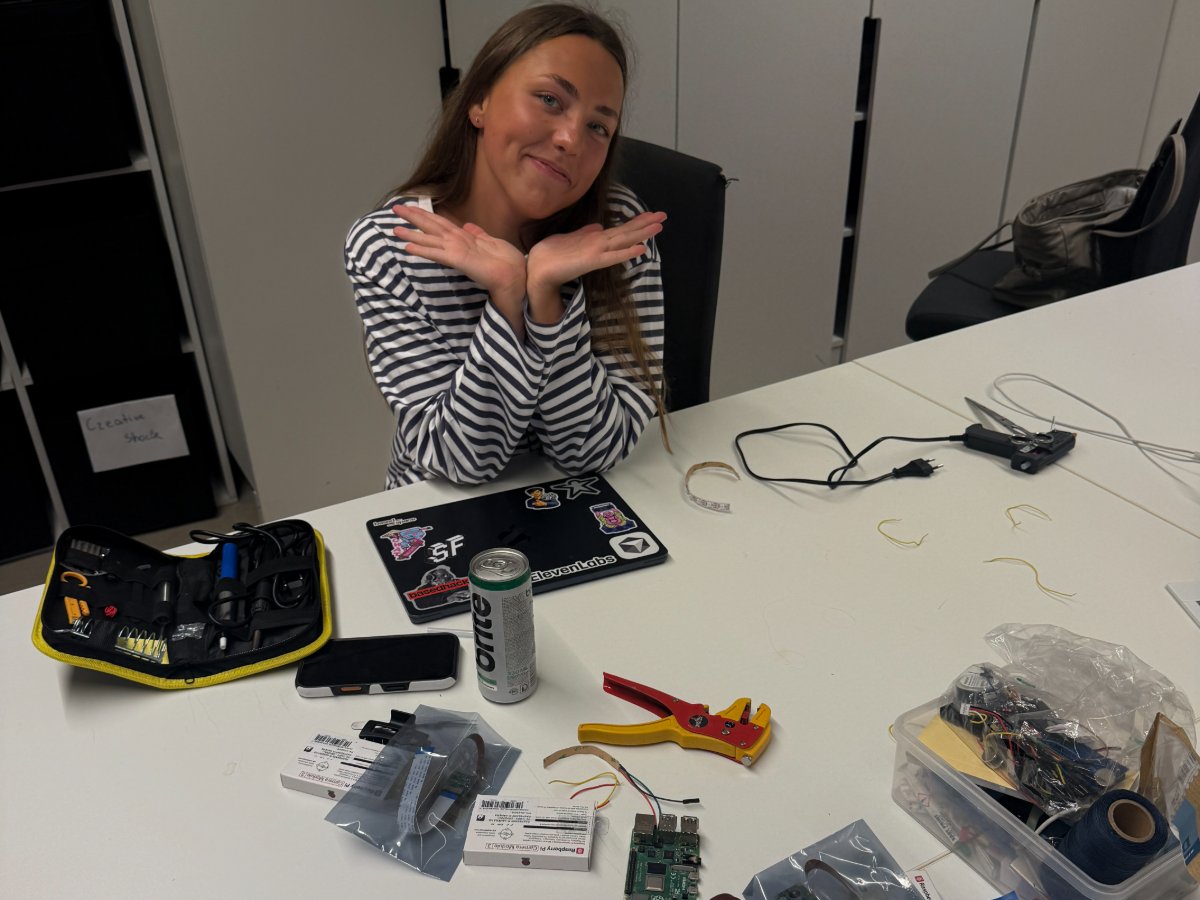
Building the device is the easier part for them. The hard part is waiting. Some of the parts they need are scarce, and deliveries to Lithuania can take weeks. "That's the biggest bottleneck," Rugilė says. "You can't iterate fast."
People assume hardware is hard because the engineering is hard. For a lot of early devices, I suspect the engineering is the easy part and the calendar is what slows you down. If every fix takes two weeks to test, you get about 25 tries a year. A software team can get that many in a week.
That's one reason they flew to San Francisco on 15 November. Amazon delivers there the next day.
Why not send skin photos to an AI chatbot?
Because then the customer could do it themselves. According to Goda, some competitors send three photos of your face to Claude with a system prompt and ask it for scores. "Then why can't you just send your face to a chatbot yourself?" she says.
Rhia Skin measures skin from first principles instead, with its own metrics and its own models trained on the data the device collects.
I think this is the most important decision they've made, and it's easy to miss. A general-purpose model probably hasn't seen enough dermatologist-labelled images to score skin reliably, and it will give you a confident number either way. In most AI products I see, swapping the model is easy. The hard part is knowing whether its answer is right. With measurable metrics and a clinical baseline, Goda and Rugilė can check their answers before they have thousands of users.
Who is Rhia Skin for?
Rhia Skin is built for women first, starting with those who already spend on their skin. That puts it in one of the largest consumer categories there is. Statista estimates the global skincare market at about US$209 billion in 2026, and forecasts growth of around 3.6% a year to 2031. Women's skin also changes with hormones through the month, Rugilė points out. One photo or one dermatologist visit can't show that.
The order is deliberate. Wellness and longevity products run on credibility. "If you come in with a new product and it has a few lapses, it's game over in that market," Rugilė says. So they start with people who already care about their skin and buy products for it.
Goda sees Rhia Skin becoming a Whoop for skin: a daily read on your skin, the way Whoop gives you one for recovery.
One thing surprised them: men. A good share of clicks in their first ad tests came from men. Partly that's because men are cheaper to reach, they admit, but men showed interest in pitches too.
Where is Rhia Skin going after launch?
The long-term plan is to build the world's largest skin database and what can sit on top of it: FDA approval, mole tracking for early skin cancer detection, and skincare mixed for you each month based on what your skin needs. "We believe the future of skincare is personal," Rugilė says. That's the plan. Rhia Skin today tracks how your skin changes and makes no medical claims.
Part of the motivation is personal. Both of them have seen several dermatologists, and each one told them something different. "Everyone sees it differently. There's no right answer," Rugilė says. "We want to show what your skin is like, not how it looks to someone on a given day."
What happened on 17 November?
Rhia Skin opened pre-orders on 17 November. Goda and Rugilė are aiming for 300 pre-orders for the first batch, which they'll build themselves in Vilnius. It works with iPhone 15 or newer.
Pre-order Rhia Skin and share their launch post.
Frequently asked questions
What is Rhia Skin?
Rhia Skin is an at-home skin scanner and app built by Vilnius founders Goda Šmulkštytė and Rugilė Stanevičiūtė. You scan your face each morning with a small handheld device, and the app tracks redness, pigmentation and pores over time. It works with iPhone 15 or newer. Rhia Skin tracks how your skin changes and makes no medical claims.
When can you pre-order Rhia Skin?
Rhia Skin opened pre-orders on 17 November 2026 at rhiaskin.com. It ships in January 2027. The founders are aiming for 300 pre-orders for the first batch, which they'll assemble themselves in Vilnius before moving production to suppliers in China. Before launch, Rhia Skin had a waitlist of about 700 people and three working prototypes.
How did Turing College help the Rhia Skin founders?
Goda Šmulkštytė joined Turing College's Software and AI Engineering programme in August 2025 and learned to code there. She says the most useful parts were the first months, when learners write code without AI, and the final courses on AI and deep learning. Turing College also brought the founders together: Rugilė kept asking Goda about the programme, and they became friends.
Which startups have Turing College alumni founded?
Turing College alumni have founded several startups. Rhia Skin, co-founded by alumna Goda Šmulkštytė, launched its at-home skin health tracker on 17 November 2026. Fieldy, founded by early learner Martynas Krupskis, makes a wearable AI note taker. Condense, founded by Edvard Sivickij, cuts the number of tokens AI agents use and was selected for a16z speedrun.
Sources. All sources accessed on 9 November 2026. Statista Market Insights: Skin Care worldwide, 2026 revenue estimate and 2026 to 2031 forecast.