
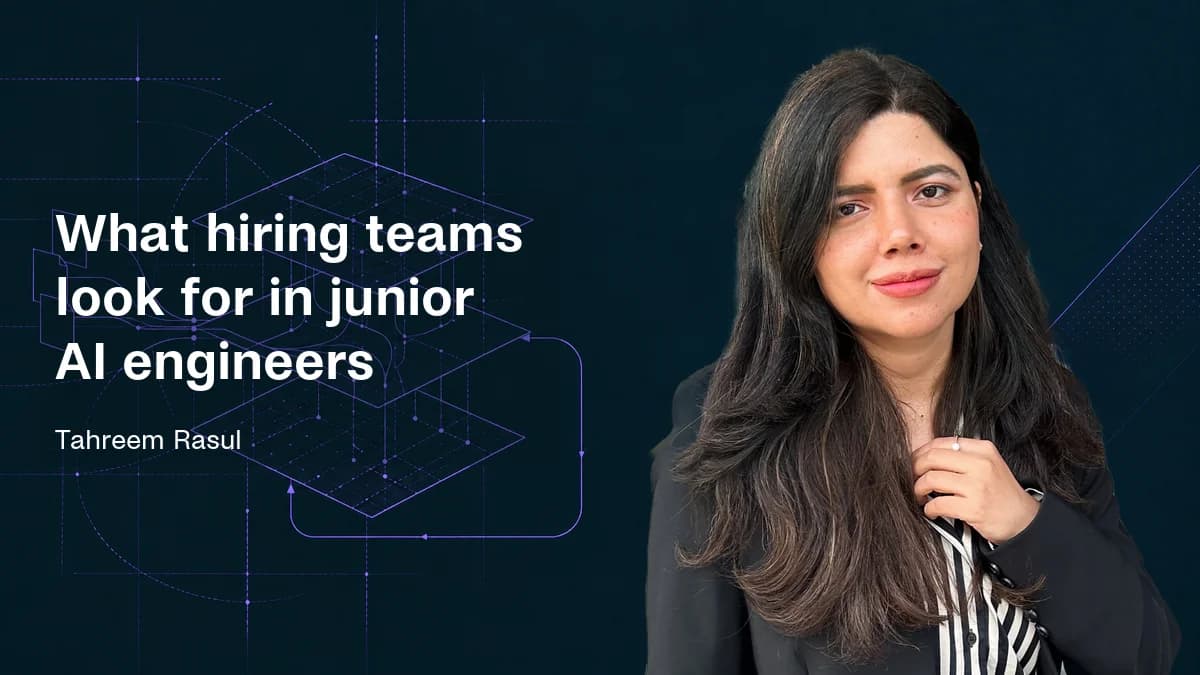
To get your first AI engineering job, show that you can take an application beyond a working demo: explain its design, technical architecture, evaluate its results against a user need and investigate the data and failures behind its behaviour. That's the view of Tahreem Rasul, Tech Lead AI at Red Buffer, Senior Team Lead at Turing College, and Google Developer Expert in Generative AI.
Building an initial AI proof of concept is easy; understanding whether it solves a real problem, where it fails and how to improve it is a much larger part of the job
- she says.
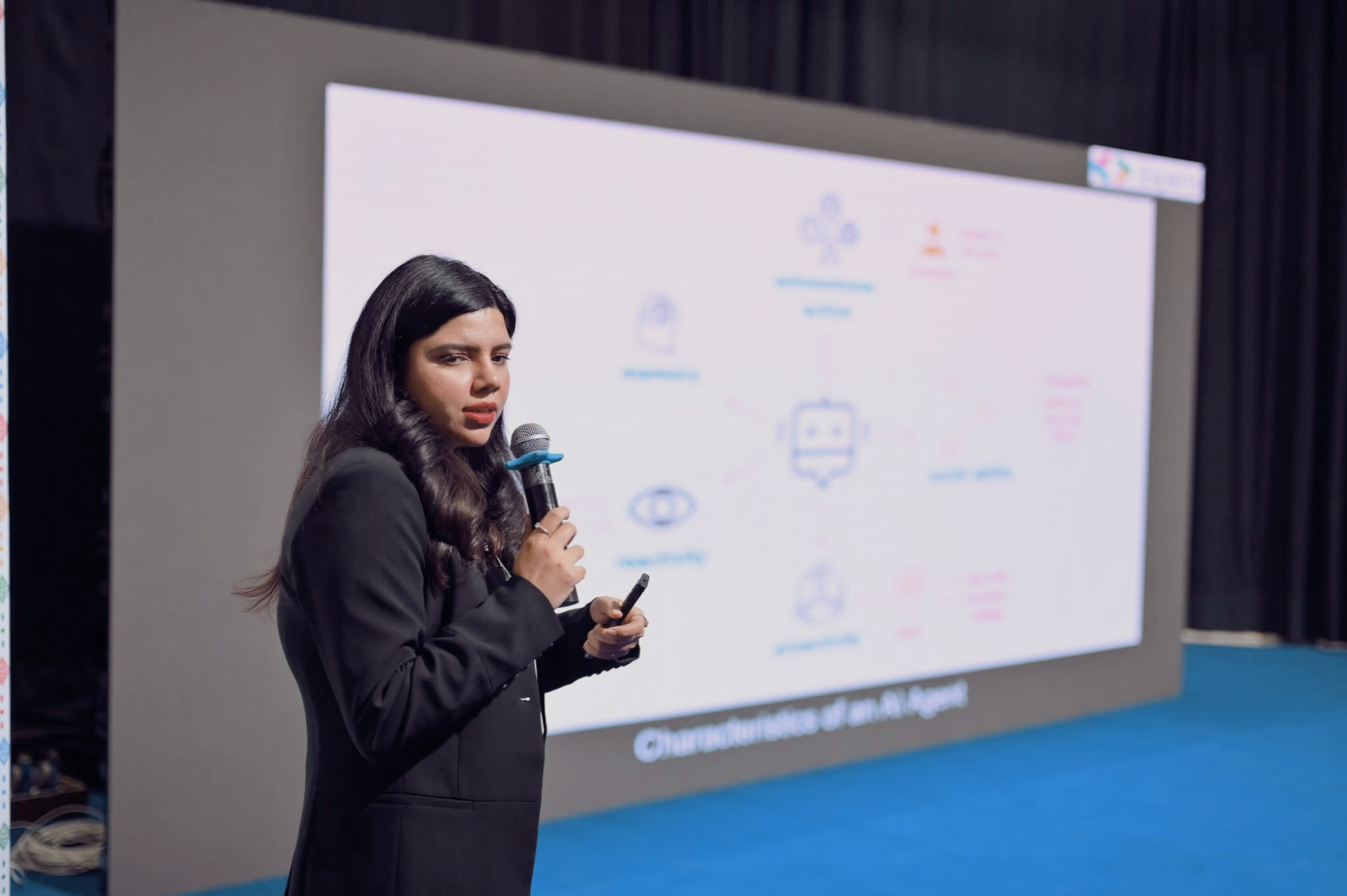
Tahreem has more than eight years of experience building and leading AI systems across generative AI, computer vision, NLP and enterprise applications. At Red Buffer, she leads teams building AI-integrated enterprise software, working on applied AI projects involving document retrieval, RAG, agents, computer vision and backend services. Her job includes turning business requirements into technical decisions, reviewing implementations, investigating failures and helping engineers take a working prototype to something reliable enough for real use. She also interviews candidates for AI engineering roles.
At Turing College, Tahreem is a Senior Team Lead on the AI Engineering programme, where she leads a group of learners through their studies. In 1:1 project reviews, she gives learners advice and questions their technical decisions, helping them strengthen their technical foundations and engineering judgement.
We asked Tahreem how she assesses junior AI engineers at Red Buffer: what she looks at in technical interviews, what she sees applicants miss and how she'd prepare if she had three months. Everything below comes from her own experience of hiring and reviewing projects.
In short, Tahreem looks for:
Ability to translate stakeholder requirements into technical product decisions
Design choices you can explain, including their trade-offs
An understanding of AI engineering fundamentals such as prompting, embeddings, retrieval and tool calling, including their limits, as well as software engineering principles
Understanding how evaluation works for AI systems, and how it can be integrated into different applications as a system
The habit of digging into data and failure cases to find the cause of a problem
Enough Python to read, question, modify, test and debug the code, including code an AI assistant wrote
Curiosity and the ability to respond to feedback
What skills do you need for a junior AI engineering job?
For a first AI engineering role, Tahreem expects you to be comfortable enough with Python to take responsibility for code, including code an AI assistant wrote. For LLM-focused roles, she also expects a basic understanding of how LLM applications work. You don't need to know every tool on the market.

By comfortable with Python, she means being able to read, question, modify and debug code, including code generated by an AI assistant, and to write meaningful test cases.
AI-assisted coding is part of how we work now - she says.
Candidates need enough understanding to take responsibility for the implementation rather than blindly accepting everything a model suggests.
For an LLM-focused role, she adds prompting, embeddings, retrieval and tool calling, context engineering and designing pipelines, including their limitations.
They don't need to know every framework, but they should understand what happens underneath one. - she says.
She's comfortable helping a new hire learn the team's infrastructure, deployment processes, domain requirements and more advanced AI techniques on the job.
Curiosity and the ability to respond to feedback matter more than arriving with experience in our exact stack.
If you want to compare this with what companies write in their vacancies, read our guide to how to read AI job ads.
Why isn't a working demo enough to get hired?
A demo shows that your application works when everything goes right. Tahreem wants to see what happens when it doesn't, and whether you've tested for that. A project stands out when you can show a failure, explain how you investigated it and show whether your fix improved the result.

I want to know what happens when the input is unexpected, retrieval finds nothing useful, an API fails or the model produces an incorrect answer - she says.
She also checks whether the code is understandable.
Here's the kind of explanation she finds convincing: "These questions failed because the correct documents weren't retrieved. I changed the retrieval approach and compared the results on the same test set."
A polished interface still has a place.
A polished interface helps communicate the project, but I get more information from the developer's explanation of its limitations and trade-offs. System design thinking is critical when we hire for AI engineering roles.
How do you evaluate an AI application?
Start by defining what a good result means for your application. Then build a set of representative test cases and assess the results against that definition. A few plausible outputs aren’t enough. “AI engineering is becoming reliability engineering and a few plausible outputs are not enough to establish reliability,” Tahreem says.
Software tests check that your code behaves as intended. AI evaluation also checks whether the model’s outputs are useful and good enough. Tahreem gives three examples:
For a RAG application, assess retrieval quality and answer quality separately.
After changing a prompt, model or retrieval strategy, compare results on the same evaluation set, and check whether some cases improve while others get worse.
For an agent, check which tools it uses and how, across different kinds of queries.
Ultimately, she expects her engineers to take these results and build reliable evaluation pipelines for the applications they are building, to drive sensible product decisions and increase stakeholder confidence.
What does system design mean for a junior AI engineer?
“System design thinking is critical when we hire for AI engineering roles,” Tahreem says. For a junior, that means explaining how your application fits together and why each component is there. Expect questions like these about your own project:
What belongs in deterministic code, and what needs a model?
Does the task need an agent, or would a simpler workflow do?
What data and context does each stage need?
Where is state stored?
What happens when information is missing or a tool fails?
How do quality, latency and cost affect the design?
I look for choices grounded in the use case and an understanding of their trade-offs.
How do interviewers test AI engineering skills?
One task Tahreem would use is: "Your RAG application gives an incorrect answer. How would you investigate it?" A strong answer checks each stage of the system in turn to find where the failure happened. A weak answer changes the prompt or the model first.

RAG (retrieval-augmented generation) is a setup where an application searches a set of documents and passes what it finds to an LLM to answer a question. According to Tahreem, a convincing answer works through the stages:
Did the source contain the answer?
Was the relevant information preserved during processing and chunking?
Did retrieval find it?
Was it passed to the model?
Did the model use it correctly?
A weaker response jumps straight to changing the prompt or using a larger model without checking where the failure occurred.
If AI tools helped write your code, expect questions about it. Tahreem would ask you to explain a specific section, predict how it behaves on a new input and make a small change.
I'm interested in whether they can take responsibility for the implementation, including debugging it and writing tests when the generated code doesn't work.
Can you get an AI engineering job without AI experience?
Yes. Tahreem takes applicants seriously without previous AI employment when they show evidence that they can learn, build and explain their work. A personal project can be strong evidence if you understand how it's built, have tested it and can discuss what you'd improve.
Experience from other kinds of software work counts too.
Previous software engineering experience is valuable too. APIs, databases, testing and deployment are substantial parts of AI engineering.
Degrees and courses can give you useful foundations, Tahreem says, but she assesses what you can do with that knowledge. "A certificate tells me they completed something; a thoughtful project discussion tells me much more about their understanding."
What are the most common gaps in junior AI engineers?
Tahreem sees two gaps most often: knowing how to put a pipeline together without understanding why each part is there, and taking a few good outputs as proof that an application works reliably.
In her words: "A common gap is knowing how to assemble a pipeline without understanding why its components are there. Another is treating a few convincing outputs as evidence that the application works reliably."
Both gaps come down to how you investigate problems. Tahreem sees AI engineering as sharing a working style with data science: spending time in the weeds with source data, retrieved documents, model outputs and individual failure cases. “The code can execute correctly while the system produces poor results,” she says.
Finding out why means forming hypotheses, inspecting examples and running experiments.
Tools can assist, but engineers still need to decide what evidence matters and interpret the results. I want candidates to be comfortable with this iterative work and able to distinguish a code bug from a data, context or model-behaviour problem.
Her three-month plan below tackles both: it includes explaining the system design and its trade-offs, and building a representative evaluation set to inspect the data and failures at each stage.
How to prepare for an AI engineering role in three months
If you have three months to prepare, Tahreem recommends going deep on one project rather than wide across many tools. "Product thinking and evaluation should be part of the project from the beginning," she says.
With three months, she'd suggest:
Build one application around a clear user problem and define success.
Learn enough Python to understand, modify, test and debug its implementation, including AI-generated code.
Explain the system design and its trade-offs.
Use the project to test and implement different AI engineering fundamentals, such as prompting techniques, retrieval algorithms and/or agent patterns
Build a representative evaluation set and inspect the data and failures at each stage.
Make changes based on those findings and measure whether they improve results.
Tahreem also cut some things. "I'd spend less time collecting frameworks or building several similar chatbot demos. Taking one project far enough to understand its failures teaches you a lot."
If you'd like to spend those three months with structure and feedback, AI Engineering runs over a similar timeframe: three to four months at around 10 hours a week, or three months full-time for learners funded through a Bildungsgutschein in Germany. You build projects like the ones Tahreem describes and get 1:1 reviews from Senior Team Leads.
What it looks like in practice: one learner's job assistant
One capstone project Tahreem reviewed on the AI Engineering programme shows what she looks for. The learner built an assistant that suggests jobs based on both the user's experience and their interests, with a custom retrieval system tailored to that use case.

In the review, the learner could explain why they'd built it, the technical architecture and decisions they had taken, where it failed and why the product was useful in its current form. What stood out to Tahreem was the connection between a real user problem, their technical choices and an honest account of the limitations.
That honesty matters when she's hiring, too.
Many people try to hide missing features or failures; stating them upfront gives us a basis for improving the product.
On the AI Engineering programme, Senior Team Leads like Tahreem give learners this kind of feedback in 1:1 project reviews.
What do strong AI engineering portfolio projects look like?
Strong portfolio projects start with product thinking: they solve a specific problem for a specific user, are tested on more than a few good examples, and are open about what they can't do. With AI assisting implementation, Tahreem sees product thinking as an additional responsibility that engineers need to exercise now, and it's something her team looks for when hiring.
Like the job assistant above, a strong project lets you answer questions like these:
Why is this worth building?
What user need does it address?
Why is the chosen approach appropriate?
What is useful now, what is missing and what should be improved next?
A candid explanation of failures and missing features demonstrates awareness and helps us build better products. - she says.
Here are four projects AI Engineering learners built and shared on the Turing College project showcase that show the habits Tahreem describes. |
|---|
WP Monitor by Rolf W. A monitoring tool for agencies that look after many WordPress sites. It checks uptime, page speed and plugin vulnerabilities, and when something breaks, it searches the agency's old support emails for how it was fixed last time. Rolf calibrated the retrieval threshold on real support emails instead of guessing it. Detection stays in ordinary, tested code: the model explains problems and drafts tickets, but never decides whether something is broken, and nothing is created without a person's approval. He also lists what's deliberately out of scope, what isn't built yet and a feature he removed after building it. |
Plantopia by Felix Bögge. A plant-health agent that asks clarifying questions about watering, light and drainage before it diagnoses, because a single photo rarely settles what's wrong. It decides which documents are worth reading before retrieving them, and says when it can't be sure. Felix evaluated it against a set of 28 test cases and reports 89.3% accuracy for the top diagnosis. |
Roadbuilders Assistant by Arthur Shen. A RAG system for cost estimators at German road-construction companies, who spend most of their time finding information in long tender documents. The language model only classifies and extracts values with quotes from the source, while separate code calculates every number, so each cost estimate shows how it was reached. Estimators approve the result at four checkpoints. |
MüllMate by Jawwad Azam. A multilingual assistant that tells residents of Kiel, Germany, which bin something goes in, what it costs and when the next pickup is. Answers come from the city's waste regulations and fee schedule, with sources shown, and the assistant is live for anyone to use. |
You can browse more learner projects on the showcase.
Frequently asked questions
Do you need a degree to become an AI engineer?
A degree isn't what Tahreem assesses in interviews. She sees degrees and courses as useful foundations and previous software engineering experience as valuable, but she looks at what you can do with that knowledge: a project you've built, tested and can explain in detail. That's why a programme is most useful when you finish it with projects like that, reviewed by someone who questions your decisions.
How many AI frameworks should you learn?
Fewer than you might think. Tahreem doesn't expect junior engineers to know every framework, but she does expect them to understand what happens underneath one. She'd spend less time collecting frameworks and more time taking one project far enough to understand its failures.
Can you use AI tools to write code for your portfolio project?
Yes, but you need to own the result. AI-assisted coding is part of how Tahreem's team works, but she expects candidates to understand the code well enough to take responsibility for it, rather than accept whatever a model suggests. In interviews, she asks candidates to explain a specific section of AI-assisted code, predict how it behaves on a new input and make a small change. She wants to see that you can debug it and write meaningful tests when the generated code doesn't work.
What should an AI engineering portfolio project include?
One focused application built around a clear user problem, with a clear definition of success, tested on a representative evaluation set. Tahreem looks for evidence of a failure you investigated, the change you made and whether it improved results, plus a clear explanation of your design choices, limitations and trade-offs.
Who are Turing College's Senior Team Leads?
Who are Turing College's Senior Team Leads?
Senior Team Leads are experienced AI engineers who lead groups of learners through Turing College programmes. On AI Engineering, they run 1:1 project reviews where they give advice and question learners' technical decisions. Tahreem is one of them.
About the expert
Tahreem Rasul is Tech Lead AI at Red Buffer, Senior Team Lead at Turing College, and Google Developer Expert in Generative AI. She holds an MS in Medical Engineering (Data Mining and AI) from Friedrich-Alexander-Universität Erlangen-Nürnberg. As a Google Developer Expert, she speaks at conferences and leads workshops on generative AI and Google technologies.
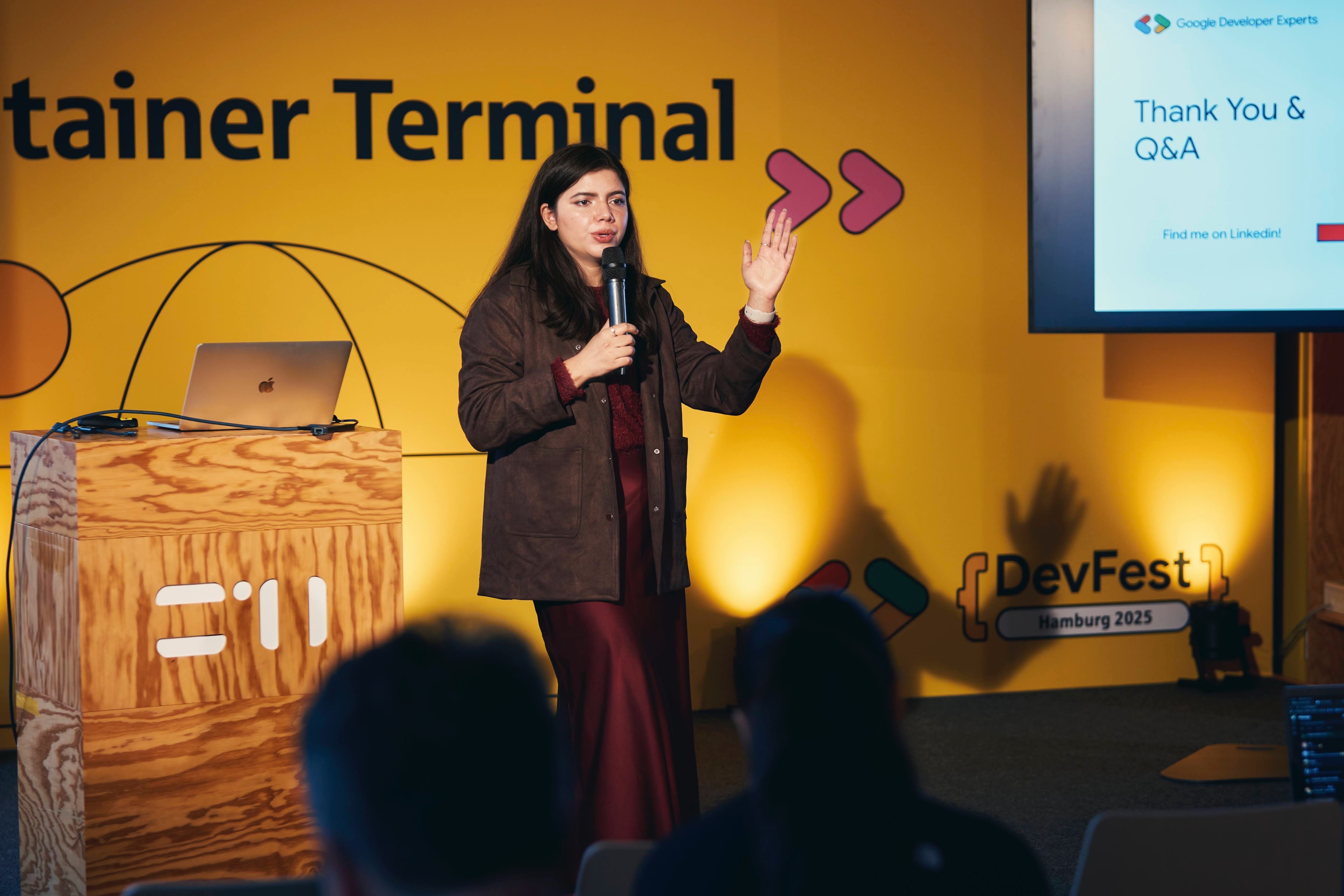
Outside work, Tahreem is a self-confessed book nerd who reads contemporary and classic literature whenever she can, and sometimes builds silly web apps just for the fun of it. She's also into true crime documentaries and podcasts, and is always looking for recommendations on what to watch next. Lately, fitness has become her new focus.
Connect with Tahreem on LinkedIn