

After more than 20 years in construction, Rimvydas Samulionis decided to learn how to create digital products with AI coding agents.
His construction experience had already taught him how to plan a complicated build, coordinate specialists and make sure the separate parts worked together. He is now applying that way of thinking through our Building with AI Agents programme.
His current project is an AI application called Ceiling Advisor, which he is developing as part of the programme. It is designed to help architects and customers find technical information about ceiling products.
Instead of searching through several datasheets and supporting documents, they can ask the application a question and see the source behind its answer. If the documents do not contain the information, Ceiling Advisor should say so.
What did construction teach Rimvydas about building with AI?
During his construction career, Rimvydas worked across project management, construction materials, procurement and technical coordination. He coordinated suppliers, architects, contractors and clients while managing budgets, schedules, and technical and commercial problems.
His work ranged from suspended ceiling installations in large commercial buildings to complete residential developments. Although the projects varied in size, they followed a familiar process:
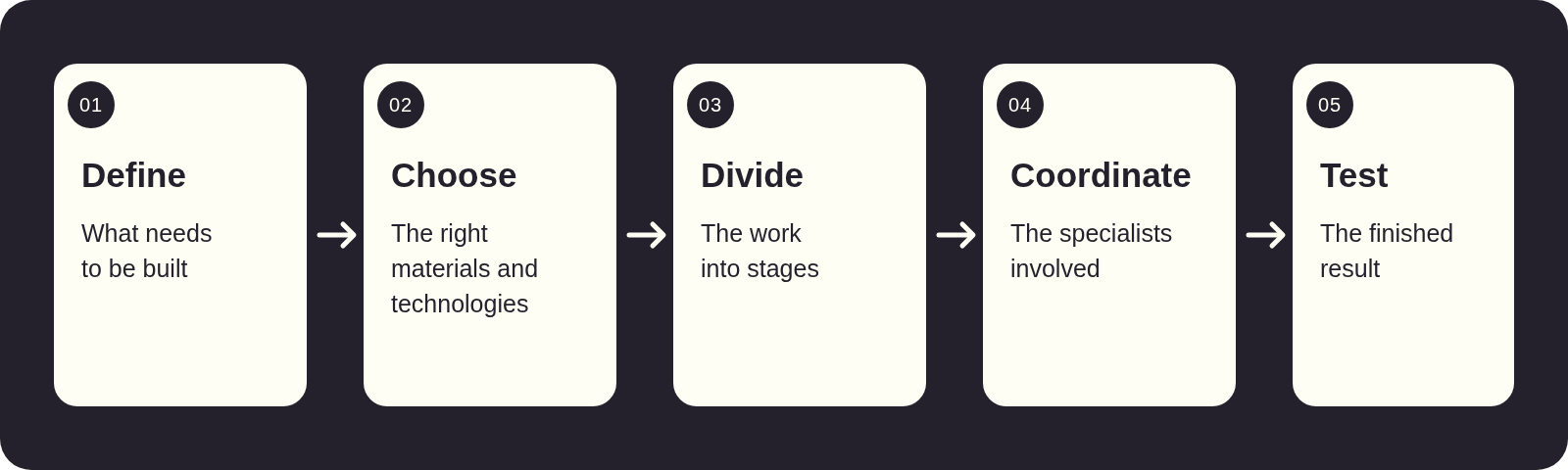
Rimvydas increasingly approaches digital products in the same way.
“I may not personally lay every brick on a construction site, and I do not necessarily need to write every line of code in a software project,” he says. “My role is to understand what needs to be built, make good decisions and make sure all the parts work together.”
When ChatGPT stopped being “CheatGPT”
Rimvydas’s interest in programming began at school, where he attended a young programmers’ school and learnt Pascal, a programming language often used to teach programming fundamentals.
Data eventually brought him back to it. Throughout his construction career, Rimvydas relied on data to analyse costs, prices, quantities, project results and business performance. He wanted to work with that information more effectively, automate more of the analysis and make better decisions.
That led him to study Data Science at Turing College, where he began working with Python, SQL, statistics and data analysis. His use of AI developed gradually.
At first, Rimvydas did most of the work himself and turned to ChatGPT only when he was stuck. He jokingly thought of it as “CheatGPT”, a shortcut for finding an answer.
As he experimented, he began asking whether AI could help with more than individual tasks. Could he use several AI tools together to create a complete product?
“You can use ChatGPT as a smarter alternative to Google search, or you can learn how to work with different AI tools and use them together to build complete products,” he says.
That distinction changed his goal. He wanted to move beyond analysing data and writing individual pieces of code. He wanted to learn how to build complete products with AI.
What changed when Rimvydas started building with an AI coding agent?
When Rimvydas joined our Building with AI Agents programme, allowing AI to handle more of the implementation initially felt unnatural. After learning Python, SQL and programming fundamentals, his instinct was still to concentrate on the code.
Working with an AI coding agent shifted his attention to a different part of the process.
“If AI is doing much of the implementation, I have to be better at defining the problem, designing the architecture, setting constraints, breaking the work into manageable steps, reviewing what was produced and testing whether it actually works,” he says.
A broad instruction such as “build me an application” did not give the agent enough direction. Rimvydas began defining the product, architecture and requirements first. He divided the work into milestones, completed one feature at a time and tested it before continuing.
“The quality of the result depends heavily on the quality of the description,” he says.
During the programme, Rimvydas has progressed from relatively simple applications to systems involving databases, authentication, security, deployment, retrieval-augmented generation and AI integrations.
An earlier programme project, separate from Ceiling Advisor, received 98 out of 100. The reviewer specifically highlighted its security architecture, data model, error handling and Git workflow, all areas Rimvydas had deliberately prioritised.
What is Ceiling Advisor, and why did Rimvydas build it?
Architects and customers often need technical information about products used in ceiling systems. Finding an answer can mean searching through several product datasheets and supporting documents.
Rimvydas is developing Ceiling Advisor to make that information easier to find and check. The AI application searches the supplied technical documents, answers questions using the information it finds and provides citations to the relevant sources.
This approach is known as retrieval-augmented generation, or RAG.

Accuracy is one of the principles guiding the project. When the source documents do not contain the required information, Ceiling Advisor should acknowledge that gap rather than inventing a technical fact.
Rimvydas has focused first on the backend, architecture, security and retrieval system. The current interface remains relatively simple, and he has already planned the next development milestones.
“I deliberately did not want to build something only to satisfy a course requirement,” he says. “I wanted to build the foundations of a product that could eventually be used in real work.”
Ceiling Advisor remains in development. Even so, building it has changed the kind of questions Rimvydas asks himself.
Finding the problems people have learnt to accept
Rimvydas sees industry knowledge, product thinking and AI engineering as a useful combination.
“The interesting problems are often not technological problems at all,” he says. “They are ordinary business problems that people have learnt to live with because nobody has built a better solution yet.”
Construction is an obvious starting point for Rimvydas because he knows the industry well. But he says he is already looking beyond it.
One product he is exploring focuses on accounting and business documents.
In many companies, he explains, information about a single transaction can be spread across an order, supplier invoice, delivery note, warehouse documents, emails, corrections and credit notes. Those documents may also use different languages.
Rimvydas says that some companies still print this information and keep it in binders because that remains the easiest way to reconstruct what happened later.
Rimvydas wants to explore whether AI could connect those documents and let someone ask questions such as:
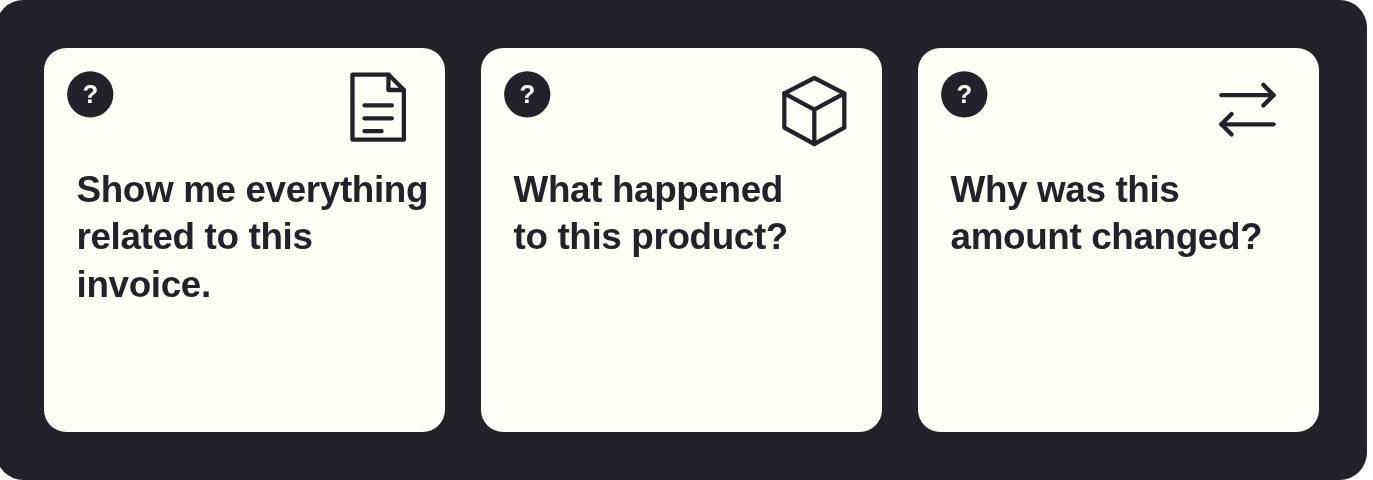
This is the kind of problem he wants to work on: a process people currently handle manually that AI might make simpler.
“I am not sure that my goal is to become a traditional programmer. I am much more interested in combining domain knowledge, product thinking and AI engineering to build useful things.”
Start with something that annoys you
Rimvydas knows that experience can sometimes make entering an unfamiliar field feel more intimidating, not less.
“If someone around my age told me, ‘AI and programming are for young people. I’m afraid to enter that world,’ my advice would be: don’t enter the programmers’ world,” he says.
“Start by building something for yourself. Take a problem that annoys you in your own work or everyday life. Describe it. Think about how you would like it to work. Ask AI to help you design it. Treat it as a hobby rather than a career change. At some point the fear disappears, because you realise that you didn’t have to ‘enter’ this new world at all. You are already in it.”
FAQ
Can someone with no coding experience use AI agents to build an app?
Yes. Building with AI Agents is a beginner-level programme, and previous coding experience is not required.
Learners direct AI coding agents such as Claude Code while building and deploying full-stack web, mobile and AI-powered applications. Applicants need a good command of English and strong motivation to learn how to work with a coding agent.
The flexible, self-funded version runs for three to four months and requires around 12 learning hours per week. The Bildungsgutschein-funded version follows a separate full-time schedule, explained below.
How can a beginner check the work produced by an AI coding agent?
The programme teaches learners several ways to check generated work rather than assuming that it is correct.
These include:
Debugging applications with Claude Code
Tracking and managing changes with Git and GitHub
Writing automated tests with Playwright
Testing authentication and database functionality
Applying security and compliance principles
Testing applications during deployment
Learners also receive feedback on practical projects. Together, these methods help them assess whether an application works as intended and identify problems before sharing it with users.
Can an AI coding agent build a complete application from one prompt?
The Building with AI Agents programme teaches a structured development process rather than relying on a single prompt.
Learners begin with prompting and context engineering before progressing to Git, GitHub, web applications, databases, authentication, debugging, automated testing, security and deployment. They also practise spec-driven development, which involves defining what needs to be built and giving the coding agent clear, structured instructions.
Learners direct the AI agent through the complete process of planning, building, testing and deploying an application.
Do I need to become a traditional programmer to build useful software with AI?
No. The Building with AI Agents programme is designed for people who want to build and ship applications by directing AI coding agents. Learners do not need to be programmers before they start or commit to pursuing a traditional programming role.
They still develop technical understanding. During the programme, learners work with tools such as Claude Code, GitHub, Next.js, Supabase and Vercel. They learn how applications are structured, connected, tested, secured and deployed while the coding agent helps with implementation.
The programme focuses on helping learners turn an idea or real-world problem into a working application.
What can learners build with AI agents?
Learners begin by building and deploying a small web application. As they progress, they work on projects involving document management, databases, search, user authentication, AI APIs and automated testing.
Later projects include an AI application, an AI personal assistant, a mobile app and a SaaS application with payments, an admin dashboard and external API integrations. For the final capstone, each learner independently designs, builds and presents a complete AI-powered application.
You can also explore the Turing College Project Showcase to see applications created by learners across our AI and software programmes. The showcase includes document assistants, industry knowledge tools, workflow automation systems, mobile applications and AI-powered business products.
Can the Building with AI Agents programme be funded with a Bildungsgutschein?
Yes. Turing College offers a separate AZAV-certified version of the Building with AI Agents programme that can have 100% of its tuition fees covered by a Bildungsgutschein if funding is approved by the Agentur für Arbeit or Jobcenter.
The funded programme is taught online in English and runs for three months. It requires 30 hours of study per week and follows a fixed weekday schedule from 09:00 to 16:30.
Funding is assessed individually and is not guaranteed. Applicants must live in Germany and have official residence status. Bildungsgutscheine are most commonly awarded to people who are unemployed, registered as job-seeking, working reduced hours or at risk of losing their job.
Applying to Turing College and requesting a Bildungsgutschein are separate processes.