
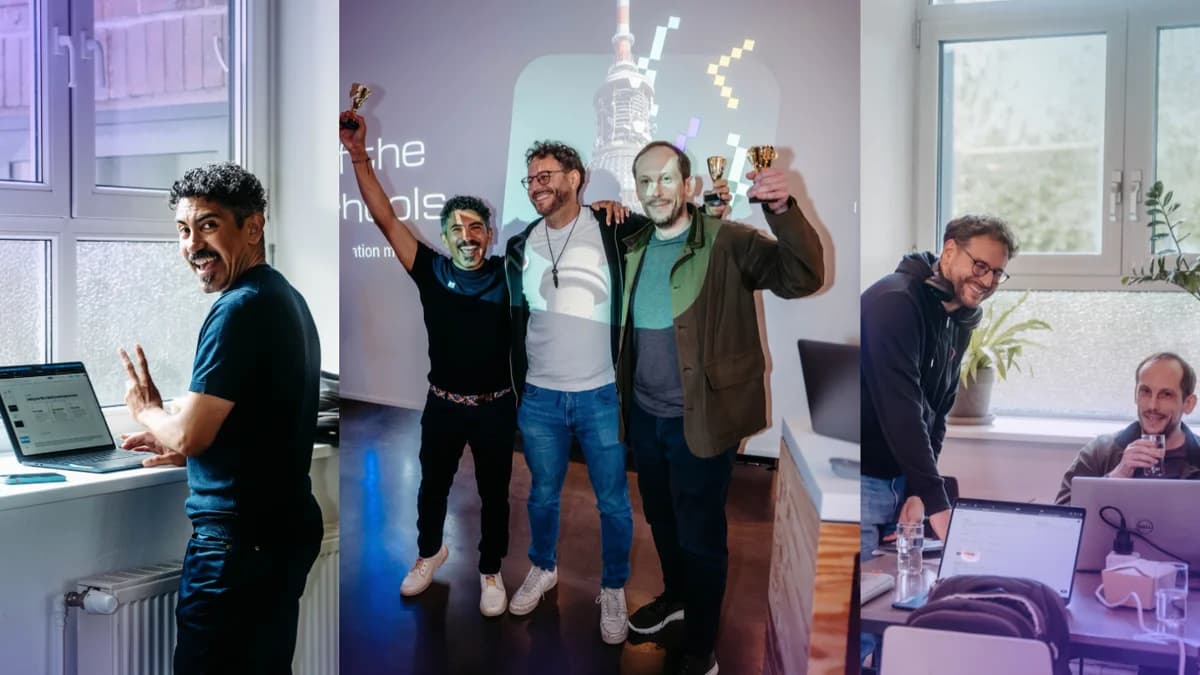
A team of five Turing College learners won Battle of the Tech Schools 2026, a three-day AI hackathon organised by WBS Coding School. The final pitches took place at the 42 Berlin campus on 30 September 2026. Their winning tool, Amt-Buddy, helps Berlin landlords turn a pile of rental applications into a shortlist. The team adapted it in less than a day, after the organisers changed the brief halfway through and asked every team to build for landlords instead.
What is Battle of the Tech Schools?
Battle of the Tech Schools is a hackathon run by WBS Coding School, where teams from different tech schools build a working AI prototype and pitch it to industry judges. The 2026 edition ran from 28 to 30 September, with two days online and a final pitch day in person at 42 Berlin.
Seven schools took part: WBS Coding School, 42 Berlin, StackFuel, neue fische, SPICED Academy, BBQ and Turing College. Each team had five members. Judges from DocMorris, Delivery Hero, Get The Flat and TeleClinic scored the pitches, and n8n sponsored the event.
What did teams have to build?
The 2026 brief, called Kiez Concierge, asked teams to build an AI-powered concierge that helps a Berliner find a home, keep one or live well in it. Berlin is growing faster than it can house the people moving there, and renting means dealing with tenancy law, registration and permits.

The tool had to use AI agents that reason through several steps, use tools and take actions, and it had to run on realistic data whose source the team could explain. The organisers advised teams to pick one user with one problem: "Depth beats breadth." Each team then had seven minutes to pitch and seven minutes to answer the judges' questions. Technical execution and the pitch carried the most weight in the scoring.
How did the brief change halfway through?
At 16:00 on the second day, the organisers gave every team the same surprise: landlords wanted help too. According to the brief, a decent Berlin flat can draw more than 500 applications in a day. Teams had until 15:00 the next day to adapt their tool to help a landlord choose a tenant, reusing as much of their existing work as possible.
The organisers listed what Berlin landlords weigh up when choosing a tenant:
income relative to rent
job security, where a permanent contract can count for more than a higher salary
household size compared with the number of rooms
a Mietschuldenfreiheitsbescheinigung, a letter from the previous landlord confirming no rent arrears, which is often weighed more heavily than a SCHUFA credit check
an overall impression of reliability
deal-breakers that vary by landlord, such as smoking
The brief also warned that applicants sometimes stretch the truth, that the same person often applies more than once, and that applicant data falls under GDPR. Teams also had to keep their tool fair: in Germany, rejecting someone because of a protected characteristic such as ethnicity, religion or disability is illegal.
What is Amt-Buddy?
Amt-Buddy is an AI agent built by a team of Turing College learners that helps Berlin landlords shortlist tenant applications. A landlord describes what matters to them in their own words. The agent turns those priorities into structured criteria, then updates the ranking of applicants and the shortlist in real time. The landlord makes the call. Team member Antonio Serna Gutiérrez summed it up on LinkedIn: "Amt-Buddy suggests. The landlord decides."
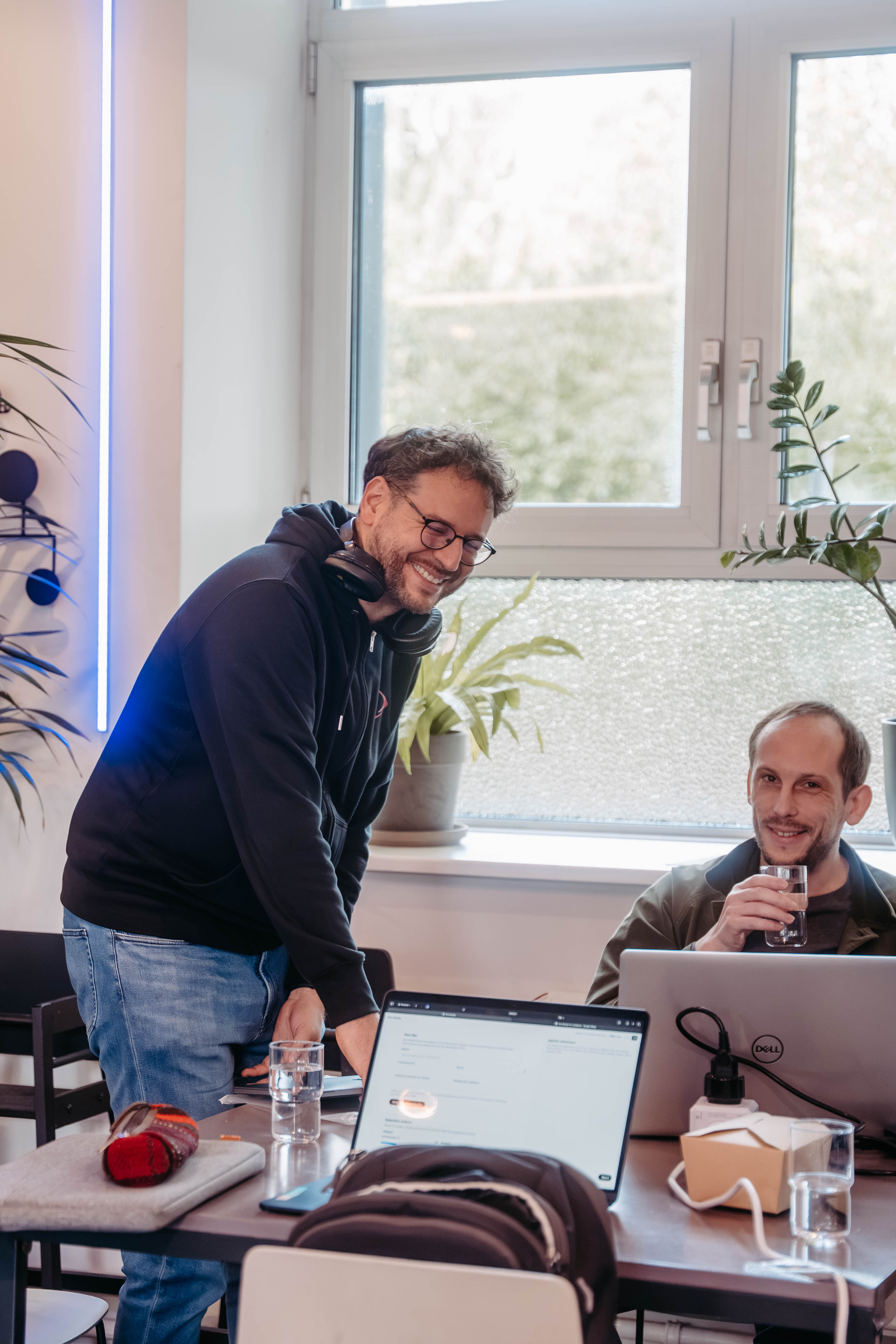
The idea started on the renter side. According to Antonio, team member Rooma Rizwan first suggested using AI to help tenants with subletting and requests to landlords. After researching the market, the team built a decision assistant that helped Berlin renters decide whether to apply for a flat, ask the landlord a question first or skip it. When the brief changed, they kept that decision logic and adapted it for landlords.
The name comes from the original plan to take on German bureaucracy, or the Amt. The landlord version has nothing to do with any Amt, as team member Yoav Pollack admitted on LinkedIn: "Zero Amt involved (ask your German friends). We kept the name anyway."
Who was on the winning team?
The team was Yoav Pollack, Matteo Rinaldi, Rooma Rizwan, Juan Orozco and Antonio Serna Gutiérrez.
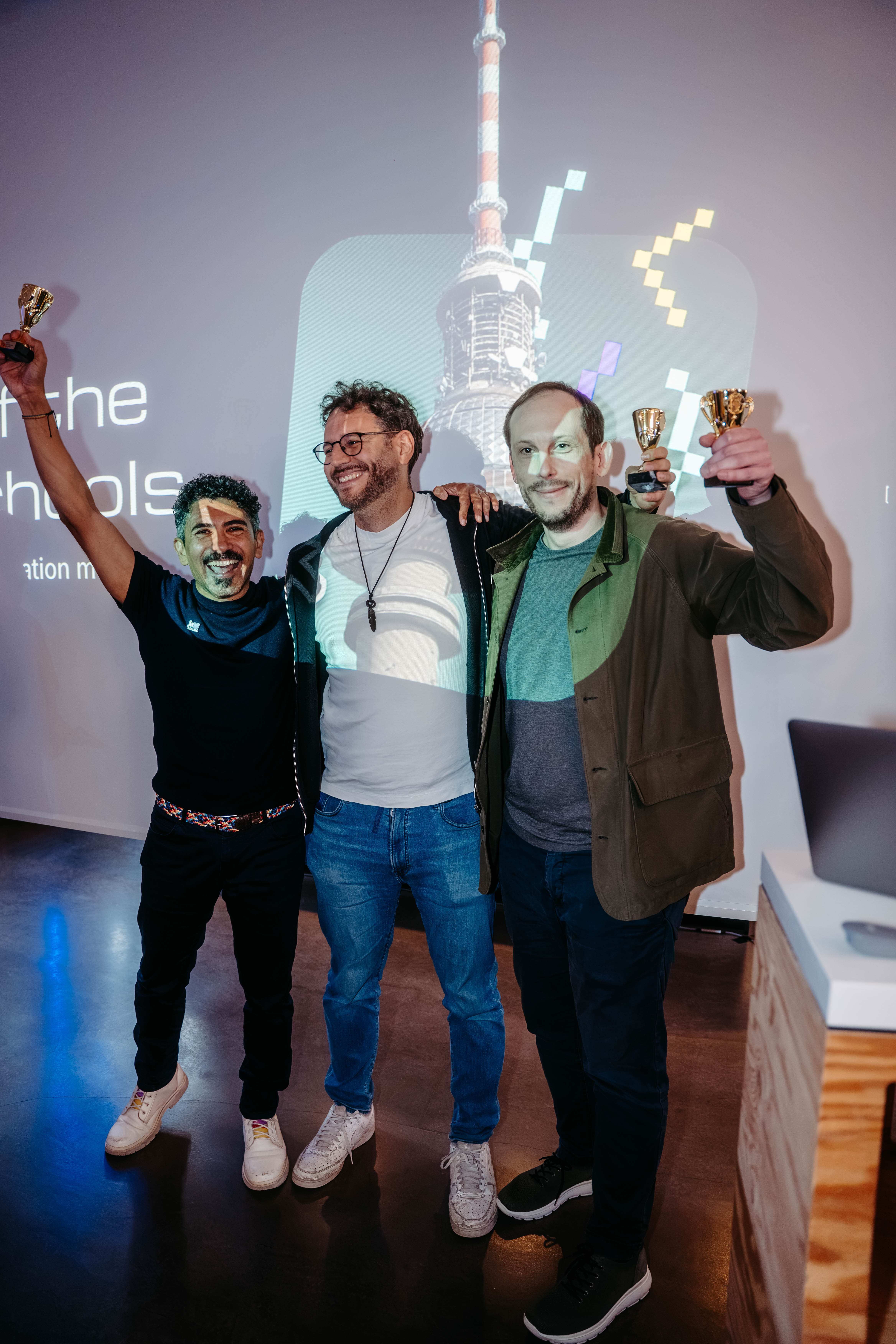
Yoav finished AI Engineering at Turing College a week before the win, where he worked with LLMs, LangGraph and AI agents. In his LinkedIn post, he called it "Just upgraded myself to AI Engineer and already a WINNER."
Antonio described the team as having "strong opinions, no egos". In his post, he thanked Turing College "for bringing us together and preparing us through its programs and internal hackathon."
You can watch the team's pitch on the event livestream, starting at 1:15.
What did the winners receive?
Each member of the winning team received a year of n8n Cloud Pro and an hour of online mentorship from a DocMorris tech professional. The team also won trophies and one paid two-month internship place at Get The Flat.
What opportunities do Turing College learners get beyond their projects?
All five team members study at Turing College with a Bildungsgutschein, the education voucher through which the Agentur für Arbeit pays for their training. Turing College brought them together as a team for the event, and Antonio credits the school's internal hackathon with preparing them for it. Competing gave them seven minutes in front of judges from four Berlin tech companies, and the win came with mentorship and an internship place.
Funded learners in AI Engineering and Building with AI Agents also get a Career Module. It covers choosing a target role, reading job postings, LinkedIn, a tailored CV, and mock HR and technical interviews, plus a weekly Career Q&A and a monthly career session. Learners keep access for six months after the programme ends, so the support continues while they look for work.
To see what other Turing College learners have built, browse learner projects on the showcase or read more learner stories.
Photos: Studio Kreuzkölln