
Key Takeaways
- Paulius combined his product and operations experience with digital marketing at Turing College before becoming head of marketing operations at Burga.
- His team runs 50 to 60 launches a year, including The World of The Hunger Games x BURGA collaboration.
- Building with AI is cheap; the harder work is creating value, changing habits and communicating clearly.
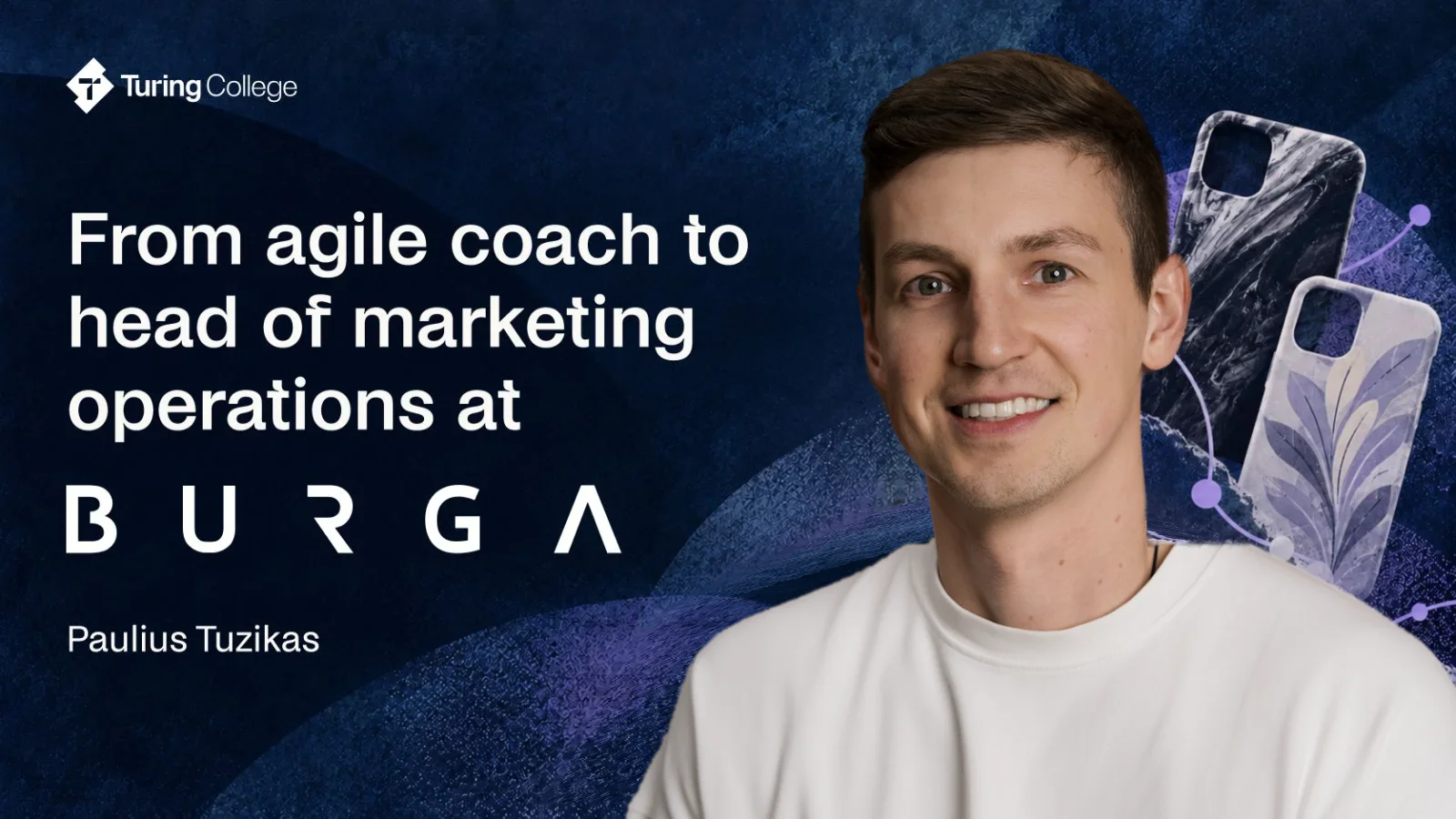
This week I caught up with Paulius Tuzikas on a Wednesday, Burga's no-meetings day. He started as a junior product owner, was a Scrum Master at Typeform and coached teams at Xero and Vinted. Then he studied digital marketing at Turing College. Today he is head of marketing operations at Burga, and his team has just launched a collaboration with The Hunger Games.
Burga is one of the biggest phone case brands in the world. Gytis Gelžinis and Linas Motiejauskas started it in 2015 with a single printer. Today it sells everything from MacBook cases to drinkware to more than 4 million customers, all made in-house in Kaunas, Lithuania.
From product owner to agile coach
Paulius started out turning client requests into tasks for developers. He soon got as curious about how teams work as about what they build. So he moved to Barcelona as a Scrum Master at Typeform.
In 2019 he went to Auckland with Nomad8, an agile consultancy. His clients ranged from ASB Bank, Xero and Auckland Airport to garage startups. At Mercedes-Benz New Zealand he helped teams in Auckland and Germany work together from opposite sides of the planet.
In 2021 he came home to lead Nomad8 Lithuania, coaching teams and improving ways of working at Vinted, Oxylabs and other tech companies. Today he sees agile as the default way organisations work. "The world has moved on," he said.
Adding marketing at Turing College
After nearly ten years in IT, Paulius decided marketing was the missing piece in his skills. At university, he says, everyone thought marketing meant flyers and posters. Digital marketing today is a far stronger tool.
He joined our digital marketing programme and tested everything on real businesses. He ran ads for Nomad8 Lithuania. He also suggested ideas for his friends' businesses.
Without the programme, he says, learning the vocabulary alone would have taken him much longer. I see his move as two parts coming together. He already understood product and operations, and Turing College added marketing.
Turning phone cases into fashion accessories
People buy a new phone case when they change phones, every two or three years. Paulius says that's only half the story. "A dark autumn comes, and you feel this sea blue isn't really for you any more."
So Burga plans collections like a fashion brand. Summer is Mykonos, feta and oranges. Winter is ribbons, more red and snowflakes. To me a new case is like a new scarf: the old one still works, but it no longer fits the season or the mood.
Paulius's team runs 50 to 60 launches a year, roughly one a week, with some launches involving around 50 people. The latest is The World of The Hunger Games x BURGA, an 18-piece collaboration with Lionsgate that his team coordinated. It's timed for The Hunger Games: Sunrise on the Reaping, out on 20 November, and built around Effie Trinket's line "make them remember you".
What agile taught him about AI
I told Paulius his old job looks a lot like working with AI agents. A good prompt reads like a good sprint goal: what we want, why it matters and how we'll know it's done.
He took two lessons from agile. The first is to ask what value the work creates. Before AI, building was expensive and someone always asked whether you needed it.
Now building is cheap. "We get a bit carried away by creating," he said. "We're happy we built the output, but whether it turned into outcomes is often a question mark."
It reminds me of what happened to photos. When every shot cost money, people thought before pressing the button. Now phones hold thousands of photos nobody looks at again.
The second lesson is change management. Nobody gets a beginner's mindset overnight. Before people learn to work with AI, they have to unlearn some old habits.
How Burga uses AI
Anyone at Burga who needs Claude or AI credits gets them. Real power users are still few. That's why Burga is kicking off automation and change management initiatives.
Paulius explains the hesitation with two buttons. One says "ability to automate everything you do". The other says "stay where you are". Plenty of people hesitate over the first, because what would be left for them to do?
I see power users who no longer want to wait for anyone. Agents let them ship far faster, and syncing with other teams starts to feel like waste.
Paulius agrees, with one limit. A growth team can turn a design asset into an ad that performs, but negatively impact brand image. In a supplements or apps business that may not matter. At Burga it does.
He also wants guardrails. Everyone builds cheaply and quickly now, and not every company protects its data. "It's fun until a first incident happens," he said.
What he looks for when hiring
Paulius wants fast learners with a dose of Jocko Willink's extreme ownership: take a problem, solve it and ask when you're stuck. They also have to speak up when something isn't working.
For someone with 20 years at one company, he asks what they've done in the last year, or even the last six months. If they've started learning something new, he'll bet his team can be their next chapter.
He also weighs how sharply people communicate, and this year made it a growth goal for several people on his team. Some hear directness as aggression, the way Jocko Willink's Discipline Equals Freedom reads in sentences of four or five words. "Sharp communication is not aggressive communication," he said.
I agree. I've seen candidates with less experience beat seniors with 20 years, because they could explain their value clearly. AI now handles much of the written part: you can paste in messy notes and get a clear message back. A meeting has no such help. That's where the difference shows now.
His advice
I asked what he would do if he were 21 again. His answer: learn AI. It's now a skill you need to stay relevant at work.
The only question is how far it reaches. A radiologist can use AI to read a scan, but AI can't yet position a patient and set up the scanner. "Not there yet," he said.
Frequently asked questions
How did Paulius Tuzikas move from agile coaching into marketing operations?
Paulius added marketing to the product and operations experience he already had. After nearly ten years in IT, he saw marketing as the missing piece. He studied digital marketing at Turing College and applied it to real businesses, running ads for Nomad8 Lithuania. He says that without the programme, learning the vocabulary alone would have taken him much longer. Today he uses both skill sets at Burga.
Why does combining several skills help you take the next career step?
Combined skills fit roles that sit between teams. Paulius understood how teams plan and ship work, and Turing College added marketing. His role at Burga needs both: his team runs 50 to 60 launches a year, with some launches involving around 50 people. When he hires, he looks for the same pattern: people who have started learning something new in the last year.
What skill does Paulius Tuzikas recommend learning now?
Paulius recommends learning AI. Asked what he would do if he were 21 again, he said AI is now a skill you need to stay relevant at work. He also names the harder part. Building with AI is cheap; creating value, changing habits and communicating clearly take more work. At Burga, anyone who needs Claude or AI credits gets them.
Want to start building with AI?
Ship real products with AI agents on our hands-on Building with AI programme.